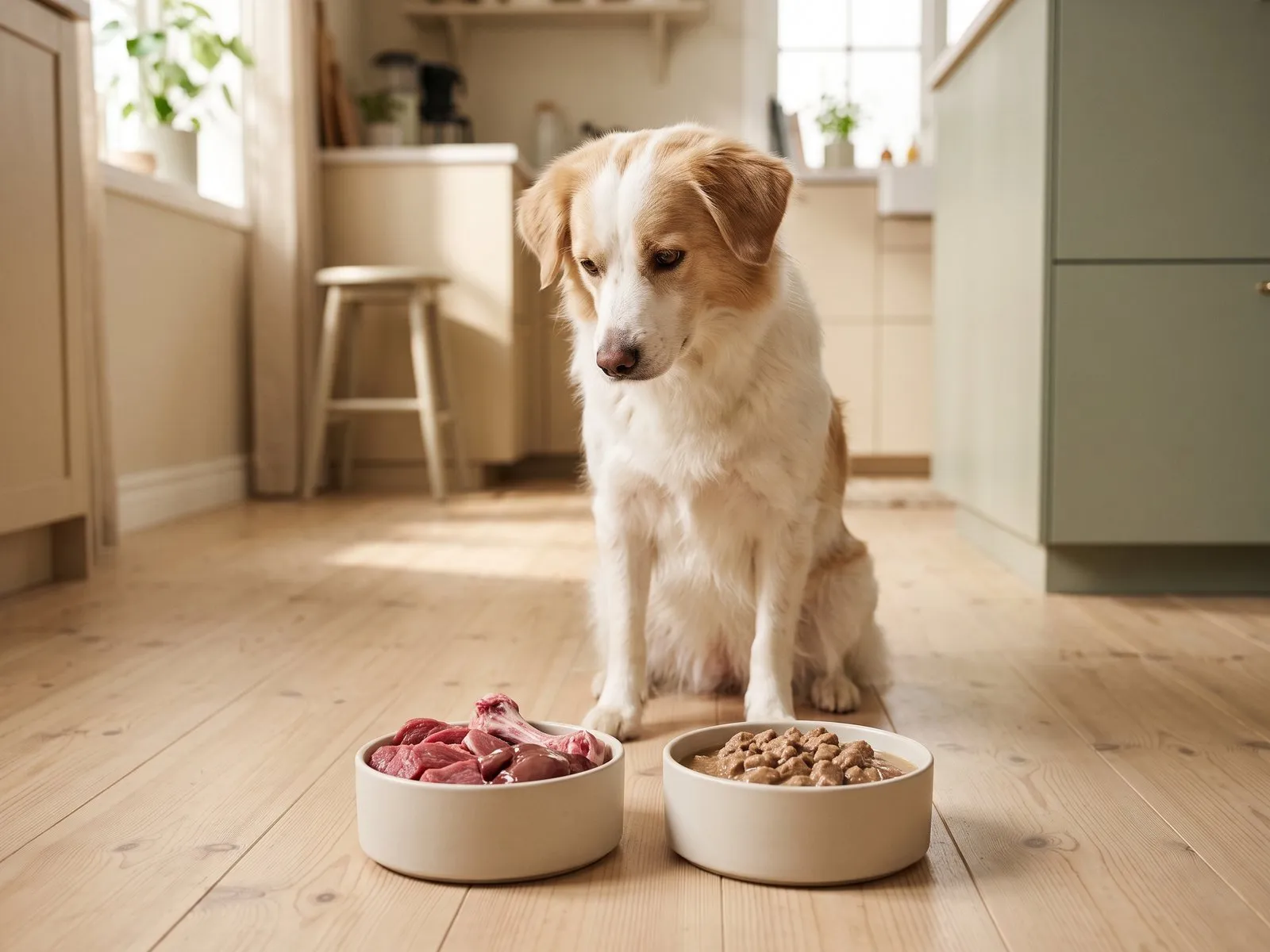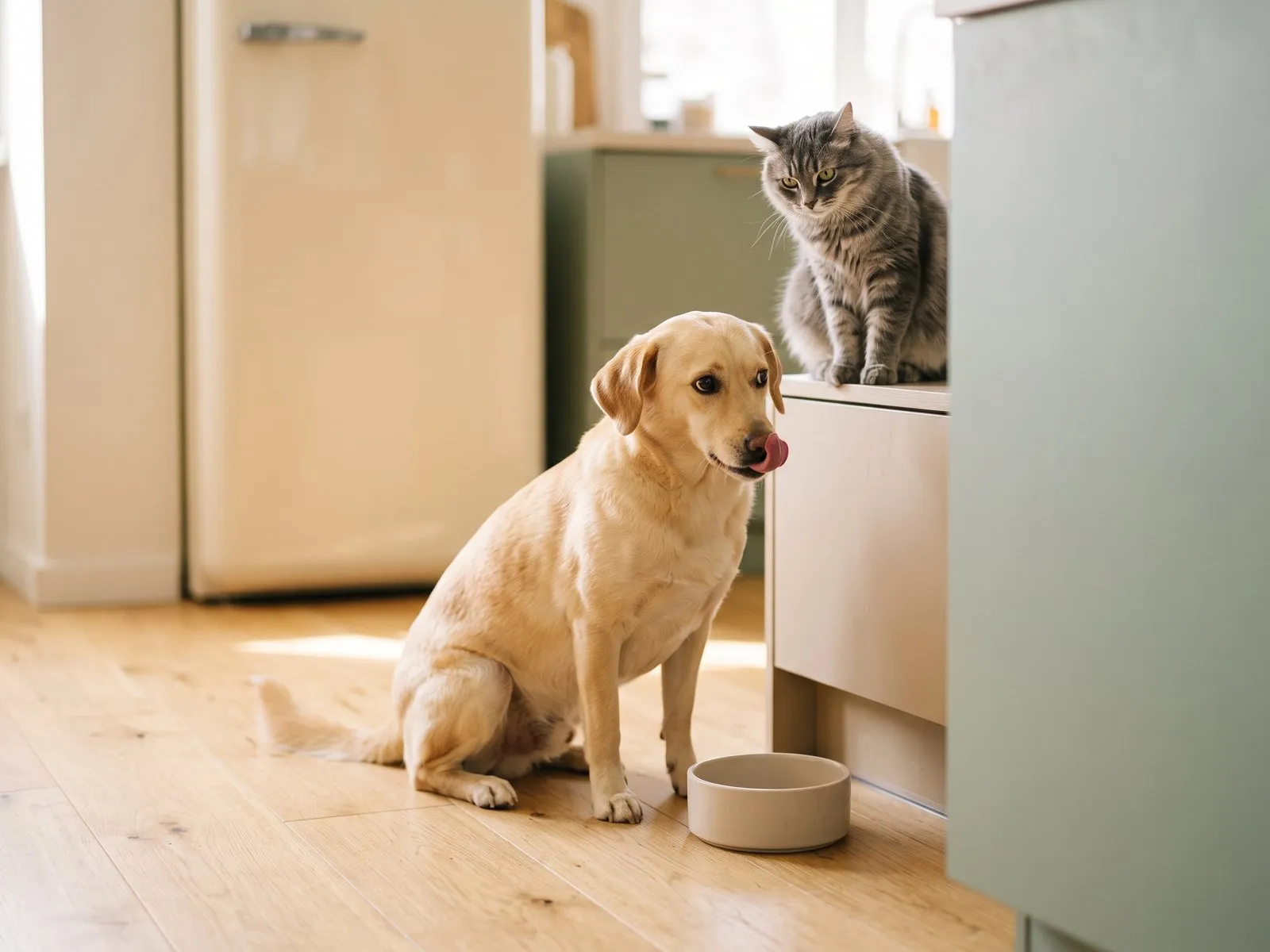
Alongside classic dry food and wet food from a can, you will also find foods with an in-between texture, soft and springy. This is semi-moist food, a lesser-known category that has its advantages, but also pitfalls worth knowing about before it ends up in your dog’s bowl.
What is semi-moist dog food
Semi-moist food has a soft, springy texture and a moisture content somewhere between crunchy kibble and wet food from a can. This makes it easy to eat, and at the same time easier to portion and store than wet food.
The advantages of semi-moist food
- Soft texture. It works well for dogs who struggle to chew hard pieces.
- High palatability. It can come to the rescue with fussy eaters who refuse dry food.
- Convenience. It is easy to measure out and store without keeping it in the fridge.
What to watch out for in the ingredients of semi-moist food
To keep the food soft and long-lasting without refrigeration, manufacturers often add substances that hold in moisture, such as glycerine, propylene glycol or sorbitol, and sometimes sugars or salt as well. On top of that there are usually preservatives and acidity regulators that protect the food from mould. That is why, with semi-moist food in particular, it is worth reading the ingredients and checking what gives it its texture.
We describe how to read a label, useful for every type of food, in our guide to reading dog food labels.
Semi-moist, wet or dry
| Feature | Dry | Semi-moist | Wet |
|---|---|---|---|
| Water content | lowest, about 10 percent | in between, usually 15 to 35 percent | highest, about 75 to 80 percent |
| Degree of processing | highest, extrusion | high, often extrusion plus additives that keep it soft | usually lowest |
| Texture | hard kibble | soft and springy | moist, ready to serve |
| Typical ingredient risk | fillers and starch | sugars and substances that keep it moist | depends on the quality of the recipe |
A clean composition does not go hand in hand with moisture here: semi-moist food sits in the middle of the table, but not always in the middle when it comes to the quality of the recipe. We look at the differences between dry and wet food in more detail in our guide wet or dry dog food.
Which dogs it suits
Semi-moist food can help seniors, dogs with sensitive teeth and fussy eaters. If, however, you care about the cleanest possible composition and good hydration, a complete wet food is often the better choice. You can read more about the formats of wet food itself, including the differences between pâté and chunks in sauce, in our guide to wet dog food formats.
Veli is that kind of food: gently cooked, in 200 g, 400 g and 800 g cans, with a fully declared composition. Its moisture and softness come from meat broth, not from substances that hold in moisture. It contains no added sugar either. Just remember that an opened can needs to be kept in the fridge for no more than 4 days. If you are looking for a soft food with a clean composition, build your bundle to suit your dog’s needs.
How does semi-moist food differ from wet food?
Semi-moist food contains less water than wet food and has a firmer, springy texture. Wet food from a can is moister and usually less processed.
Is semi-moist food healthy?
It can be, but a lot depends on the ingredients. Check that it does not contain too much sugar or salt added for taste and shelf life.
Which dogs is semi-moist food for?
Most often seniors, dogs with dental problems and fussy eaters. It is always worth checking the ingredients first, however tempting the label looks.