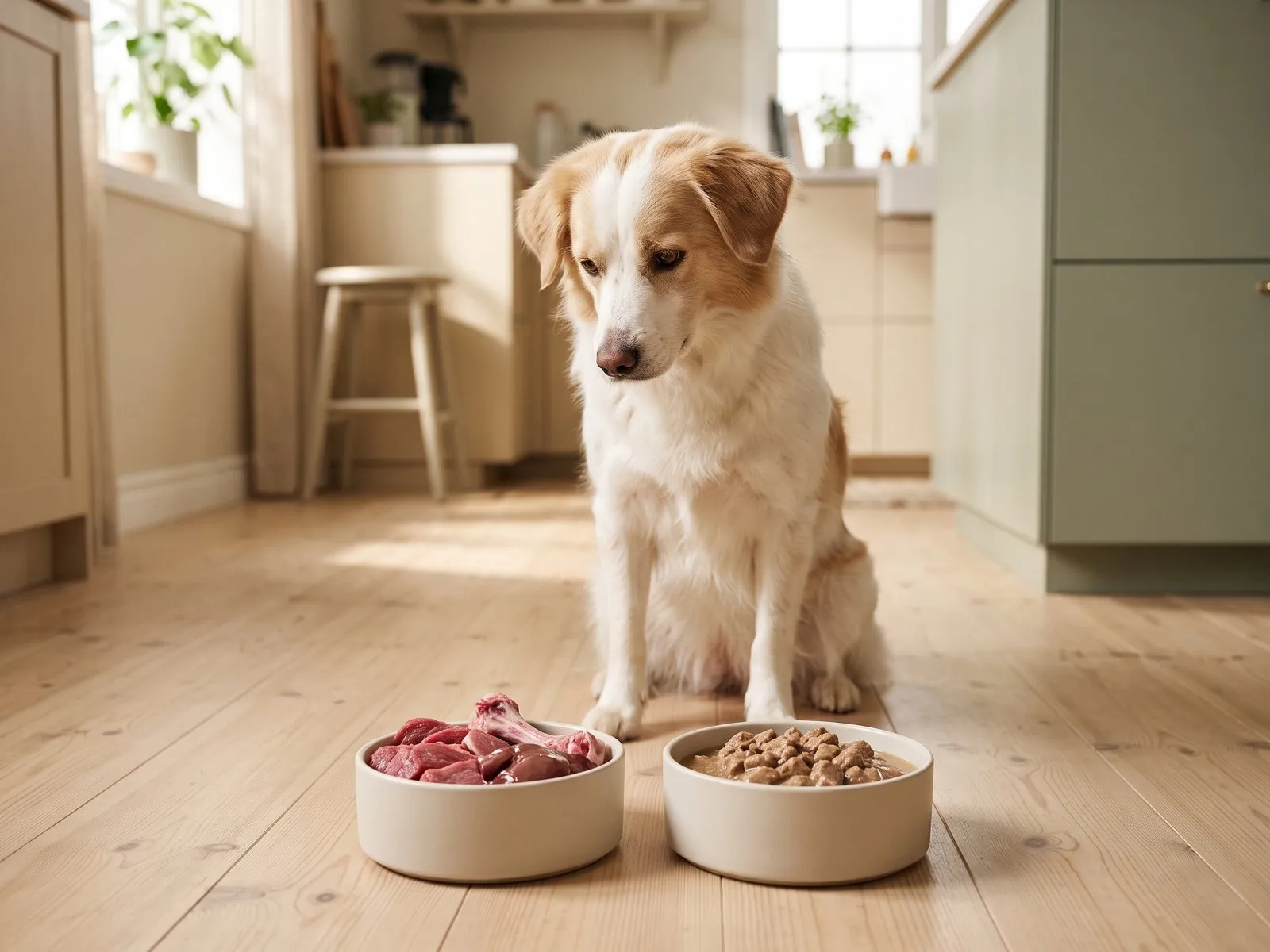
It is one of the first questions almost every dog owner asks, and the answer only gets more complicated the more conflicting opinions you find online. In practice both types have their strengths, and the choice depends mainly on your dog and your lifestyle together.
The main difference: water and processing
Wet food is about 75 to 80 per cent water and is gently cooked. Dry food is usually kibble made by extrusion, a process that uses very high temperature and high pressure.
| Feature | Wet food | Dry food |
|---|---|---|
| Water content | about 75 to 80 per cent | about 10 per cent |
| Processing | gentle cooking | high temperature extrusion |
| Your dog’s hydration | supports it | depends on how much your dog drinks |
| Palatability | usually higher | depends on the dog |
| Cost per portion | higher | lower |
| Storage | in the fridge once opened, a few days | long, no refrigeration |
We describe the extrusion process and other types of food in more detail in our guide to choosing dog food.
The benefits of wet food
- Hydration, especially important for dogs that drink little.
- High palatability, useful for fussy eaters.
- More volume in the bowl for the same number of calories, which makes weight loss easier.
- Less processing than classic dry food.
The benefits of dry food
- Easy to serve and keeps for a long time without refrigeration.
- Lower cost per portion.
- Easy portioning, especially for large dogs that eat a lot of food every day.
When wet food is especially good
Wet food is often the better choice for dogs that drink little water, for seniors, fussy eaters, dogs on a weight loss plan and dogs with a sensitive stomach. In these cases hydration, palatability and the volume of the meal matter especially. You will find more about feeding older dogs in our guide to feeding a senior dog.
What to do when your dog has recurring digestive problems is set out in our guide to sensitive stomachs in dogs.
A mixed diet and where Veli fits in
You can also combine both types, for example wet food as the base and dry food as a top-up. Just remember to add up the calories from both foods, because otherwise it is easy to overfeed.
If you want a less processed, well hydrating food with clean ingredients, Veli is a good fit: a complete wet food, gently cooked without extrusion, in 200 g, 400 g and 800 g cans, with a percentage next to every ingredient. Build your bundle and we will match the portion and the choice of flavours to your dog’s needs. If you combine Veli with dry food, remember to reduce the portions of both accordingly.
Is wet food healthier than dry food?
You cannot say without looking at the specific product. Wet food hydrates better and is less processed, but its value depends on the quality of the ingredients, not on the format alone.
Can I mix dry and wet food?
Yes, many dogs eat a mixed diet. Just remember to add up the calories from both foods and not to overfeed your dog.
Does wet food damage a dog's teeth?
Wet food on its own does not damage teeth. Ordinary dry food will not clean them well enough to replace brushing either. Look after your dog's oral hygiene whatever type of food it eats, for example with brushing and regular check-ups at the vet.