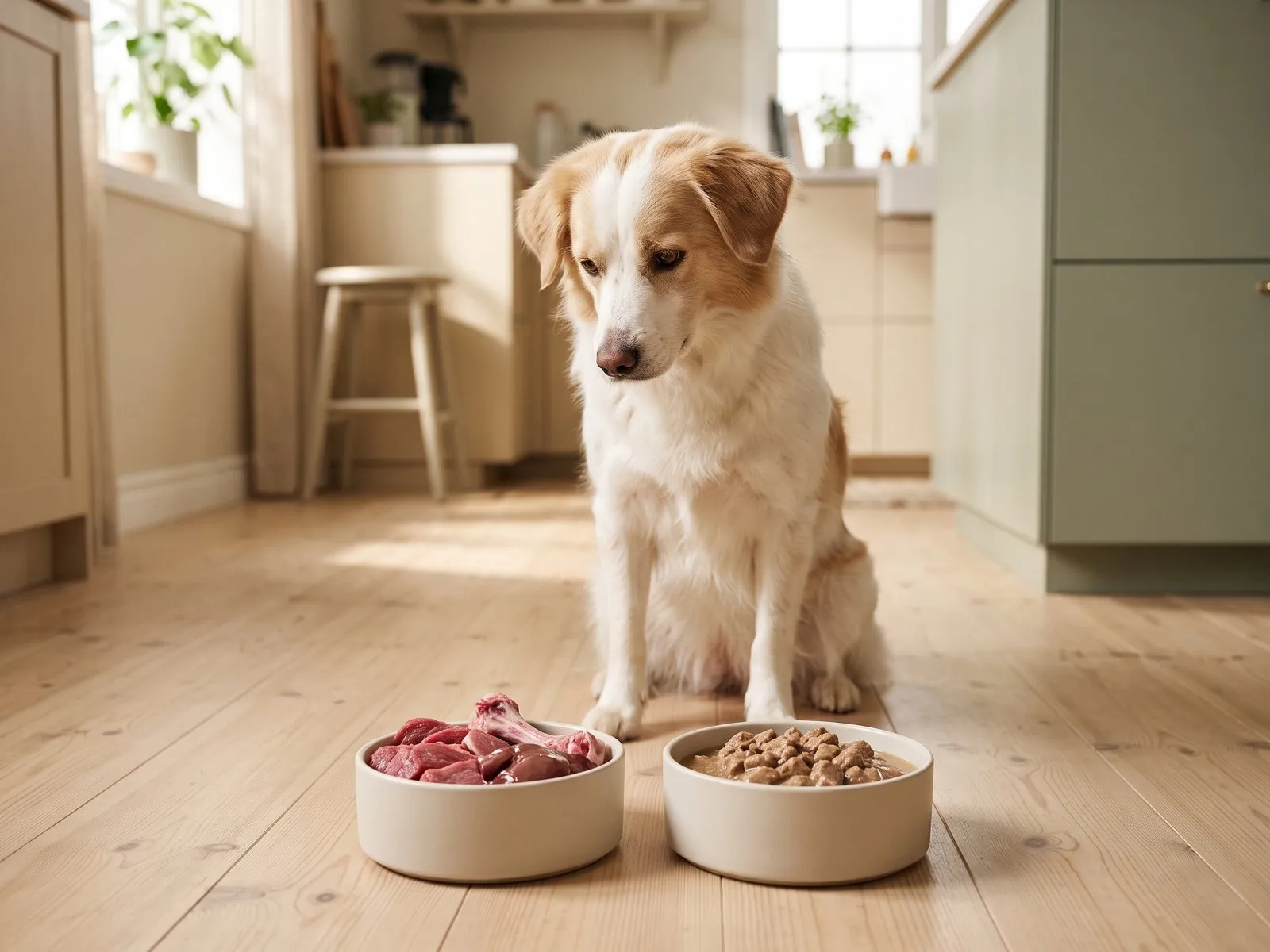
Looking at a shop shelf full of wet food, it is easy to get lost: cans, pouches and trays, and on top of that pâtés and chunks in gravy. Before you start judging which format is better, it is worth separating two completely different things that are easy to mix up.
Texture is not the same as format
It is worth telling two things apart. Pâté, mousse or chunks in gravy describe the texture of the food, while a can, a pouch or a tray is the way it is packed. In theory the same recipe can come in different formats, so it is worth judging these two choices separately.
Pâté
Pâté is a smooth, even mass. It is easy to eat and works well for seniors, fussy eaters and dogs with dental problems. It is also handy when you need to sneak a medicine prescribed by your vet into the food.
Chunks in gravy or jelly
This texture has a clear structure, and the gravy adds extra moisture. It is often very appealing to dogs that like to feel the pieces, although this kind of structure will not suit every dog. If your dog has problems with their teeth, chunks of meat may be hard for them to chew.
| Texture | Structure | Which dog it suits |
|---|---|---|
| Pâté | a smooth, even mass | seniors, fussy eaters, dogs with dental problems |
| Chunks in gravy or jelly | clear pieces, the gravy adds extra moisture | dogs that like to feel the structure, harder with dental problems |
Can, pouch or tray of dog food
- Can. It protects the food well, is easy to recycle and has a fairly long shelf life as long as it stays unopened.
- Pouch. Handy for single portions, for example when travelling.
- Tray. Just as convenient for single portions, when you do not want to store the rest of the food.
This is above all a question of convenience and portioning, not of the nutritional value of the food itself.
The best choice for your dog
Choose the format to suit your dog and your own convenience, but check the composition first, because that is what decides the quality of the food, not the format or the texture. We explain how to read the label step by step in our guide to reading dog food labels.
Before you compare formats, it is also worth knowing whether wet food is a better choice for your dog than dry food in the first place. We break it down in our guide to wet or dry dog food.
Where Veli fits in
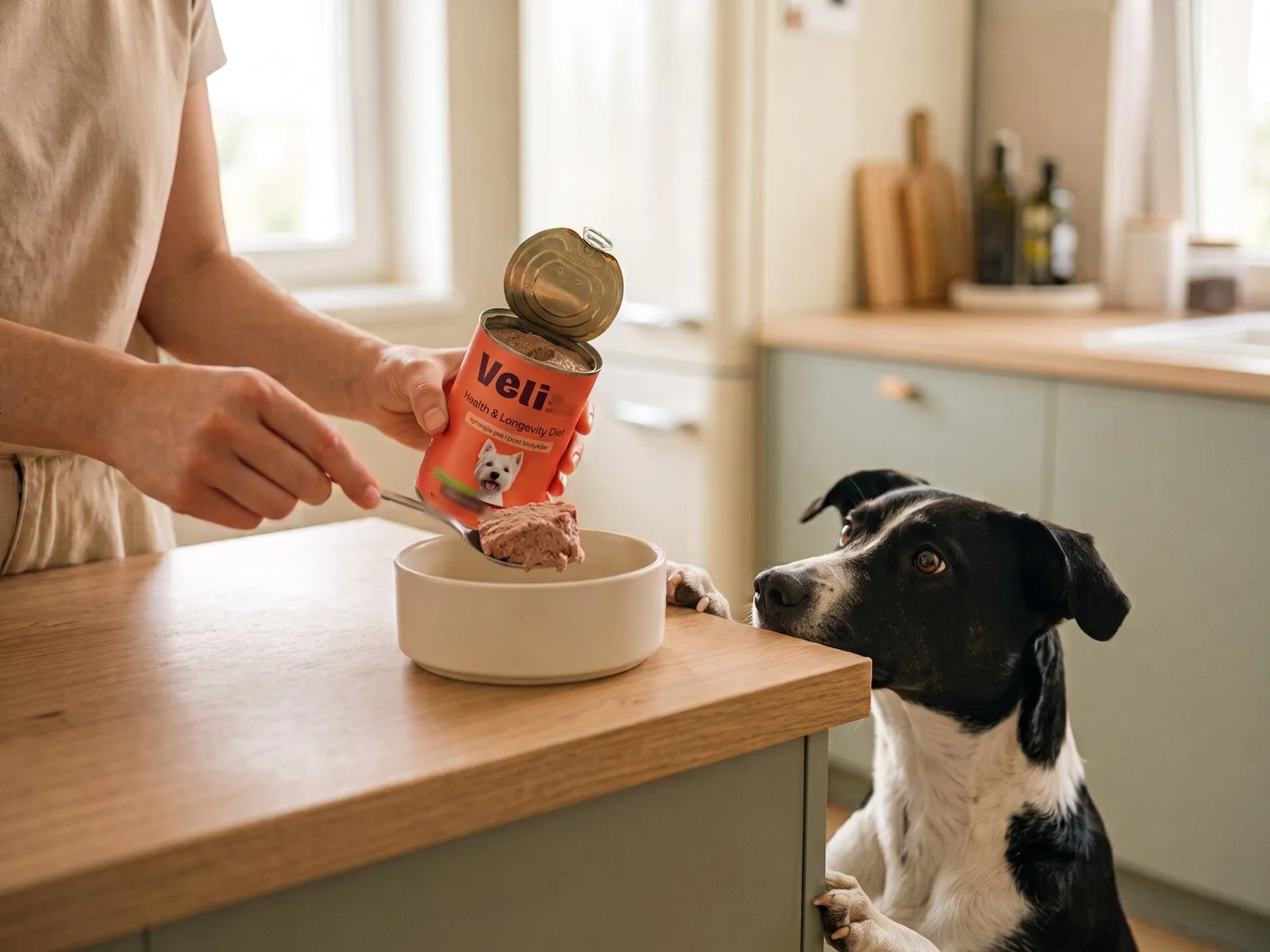
Veli is a complete wet food in the form of a hearty pâté. All recipes come in 400 g cans, and Lamb, Turkey, Venison and Pork also come in 200 g and 800 g cans. The smaller can is useful for a small dog, and the larger one for a big dog that eats more. It contains no synthetic flavour enhancers or E-numbers, and we give a percentage for every ingredient. You can keep an opened can in the fridge for up to 4 days. Before serving, warm the portion to room temperature.
Want a wet food with a clean ingredient list? Build your bundle and we will match the portion and the selection of flavours to your dog’s needs.
Which is better: pâté or chunks in gravy?
It depends on what your dog prefers. Pâté is easier to eat for seniors and fussy eaters, while chunks in gravy are often more appealing to dogs that like a clear structure.
How is a can different from a pouch?
Mainly in how the food is packed and portioned. A can stores well and is recyclable, while a pouch is handy for single portions.
How should I store opened wet food?
Keep opened food in the fridge, tightly covered, and use it within the time given by the manufacturer, usually within a few days. You can keep an opened can of Veli in the fridge for up to 4 days. Before serving, warm the food to room temperature to bring out its aroma.