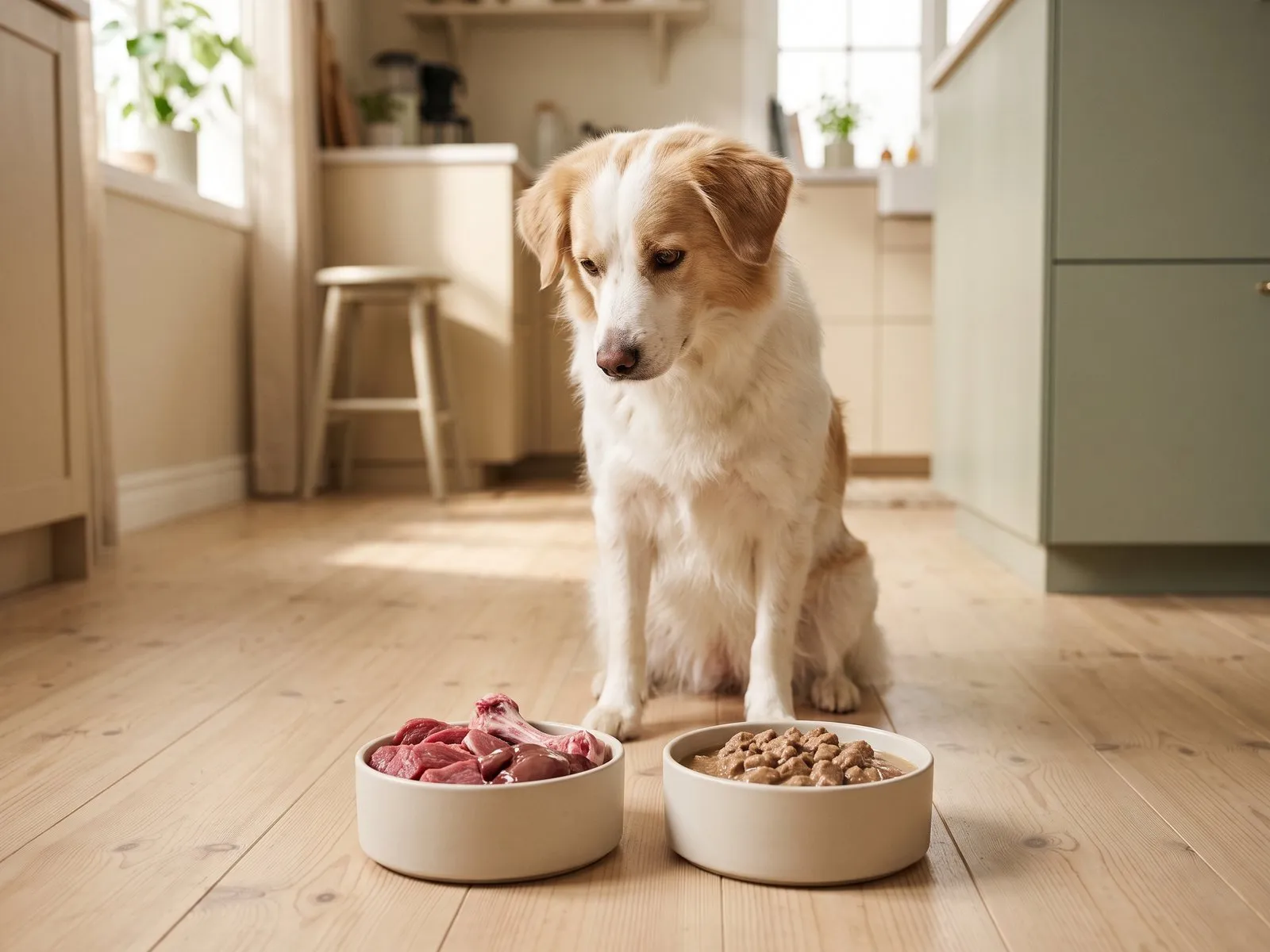
The pet food shelf can be overwhelming. Dry, wet, fresh cooked, raw, grain-free, single protein, six proteins. Before you start comparing particular foods, it is worth asking yourself one question: what kind of dog am I actually feeding? It is your dog, not the marketing on the label, that should set the direction of your choice.
Start with the dog, not the food
Before you compare particular products, try to describe your dog using a few simple criteria. This step seems obvious, but it is the one that narrows the choice the most.
- Age. A puppy, an adult dog and a senior have different energy needs and different nutritional priorities.
- Size and breed. A small dog with a fast metabolism has different needs from a large dog, for whom joint support also matters.
- Activity. A sporty dog that runs and swims needs clearly more energy than a couch potato.
- Sensitivities. A tendency to allergies, a sensitive stomach or simply being a fussy eater.
- Goal. Keeping a healthy weight, losing weight or supporting a particular aspect of condition, for example the coat.
Age and activity also decide the meal rhythm. How many meals a day a dog needs at each stage of life is set out in our guide on how often to feed a dog.
Types of dog food
Foods differ not only in flavour and price but above all in how processed they are, and that has a real effect on the nutritional value of what ends up in the bowl. Here are the main types you will come across.
- Dry, extruded food. The most popular and the cheapest per portion, easy to store and stays fresh for a long time. It is made by extrusion, which we describe in more detail below.
- Wet food. It has a high water content, so it helps keep your dog well hydrated and is usually eaten more willingly. It most often comes in cans or pouches.
- Fresh cooked food. Prepared at a much lower temperature than extrusion, and kept chilled or frozen. It keeps more of its natural nutritional value.
- Raw diet (RAW, BARF). Based on raw meat, offal and bones. Minimally processed, but it takes knowledge, discipline and strict hygiene.
- Mixed diet. Combining different types of food, for example wet with dry, to balance the convenience of everyday feeding with palatability and hydration.
Extrusion, or why the degree of processing matters
Most dry foods are made by extrusion: processing at high temperature and under high pressure, which gives the food its typical form of crunchy pieces. The process produces a long-lasting, convenient product, but it comes at a price.
High temperature reduces the content of some heat-sensitive nutrients, for example certain vitamins, which is why manufacturers add them back after processing. On top of that, the crunchy form of kibble needs a fair amount of starch, which raises the carbohydrate content of the finished product.
That doesn’t mean every dry food is automatically bad. It is more about making an informed choice: the less intense the heat treatment, the more natural value a food usually keeps. That is why wet, fresh cooked and raw foods are generally less processed than classic extruded food.
Raw diet (RAW, BARF) and fresh cooked food
A raw diet, including the popular BARF model, is based on raw meat, offal and bones with some added vegetables. Its advantages are minimal processing and high palatability for most dogs. It does, however, take real knowledge: it has to be properly balanced, otherwise nutrient deficiencies are easy to end up with; it needs hygienic preparation; and you have to accept the bacterial risk, for example Salmonella or E. coli, which affects not only your dog but everyone in the household. A raw diet is best followed with the help of a pet nutritionist or a vet.
Fresh cooked food is a kind of compromise in this line-up. The ingredients are gently cooked at a lower temperature than in extrusion, so the food keeps more of its natural value, while the heat treatment greatly reduces the bacterial risk present in raw meat. The downsides can be a shorter shelf life and a higher price than dry food.
What to look for in the ingredients, whatever the type of food
Whichever type of food you choose, it is worth looking closely at the ingredients. A good sign is a named meat at the top of the list, with its percentage, and a short, specific ingredients list with no fillers or unnecessary sugar. We explain this step by step in a separate guide to reading dog food labels.
When a special food is needed
If you suspect your dog has a food allergy, an elimination diet based on a single protein that is new to your dog can help. We write about it in detail in our guide to the elimination diet for dogs. With chronic conditions, for example of the kidneys or liver, the food is always chosen together with your vet. A healthy dog with no specific medical reason simply doesn’t need such specialist diets.
How Veli chooses the food for you
Veli is a complete wet food, gently cooked and sealed in a can, with no extrusion. We add salmon oil only after cooking, to protect the omega-3 fatty acids from high temperature. We go for a clean, fully declared composition: we give the percentage of every ingredient. There are six recipes to choose from, based on different protein sources, all with EntoPro™, our proprietary bio-protein, which we describe on our How it works page.
Instead of guessing which factors matter for your dog, build your bundle. Based on your dog’s weight, age and any allergies, we will choose the portion and the flavour mix.
What is the best food for a dog?
One that suits the age, size and needs of your particular dog and has a clean composition with a high share of meat. There is no single food that is ideal for every dog.
How do I choose food for a dog with an allergy?
First, talk the symptoms through with your vet, who will rule out other causes. The most reliable way to find the allergen is an elimination diet based on a single protein that is new to your dog, followed for several weeks.
Which dog food is the healthiest: dry, wet or raw?
There is no single winner that suits every dog. As a rule, the less processed a food is, the more of its natural value it keeps, but the quality of the ingredients, balance and safety matter too. Wet and fresh cooked foods are less processed than classic extruded food, while a raw diet needs careful balancing.
Is it worth changing my dog’s food?
Food is changed when your dog’s needs change, for example when moving to a senior diet. Make every change gradually, over about a week, so the digestive system can calmly get used to it.