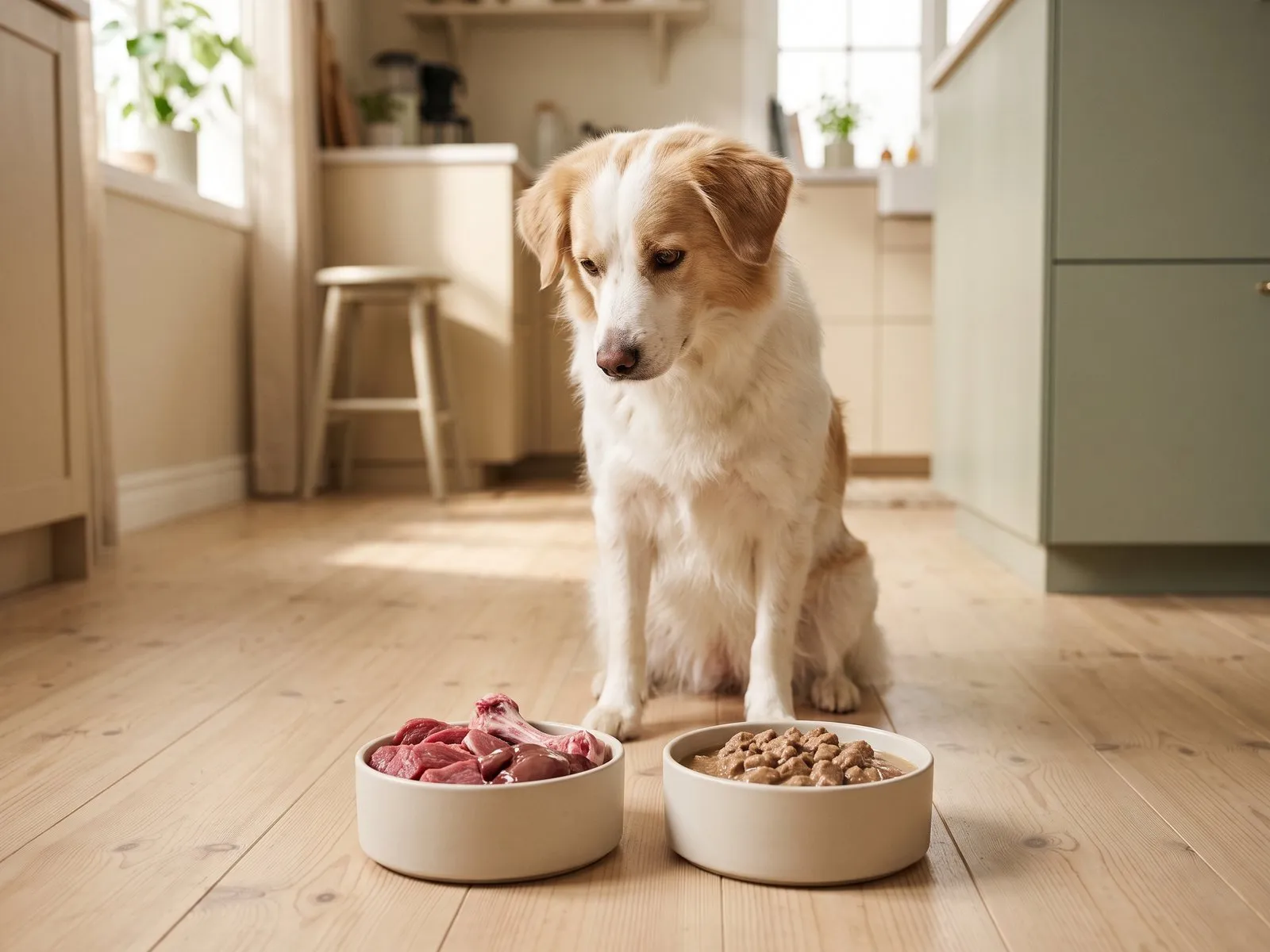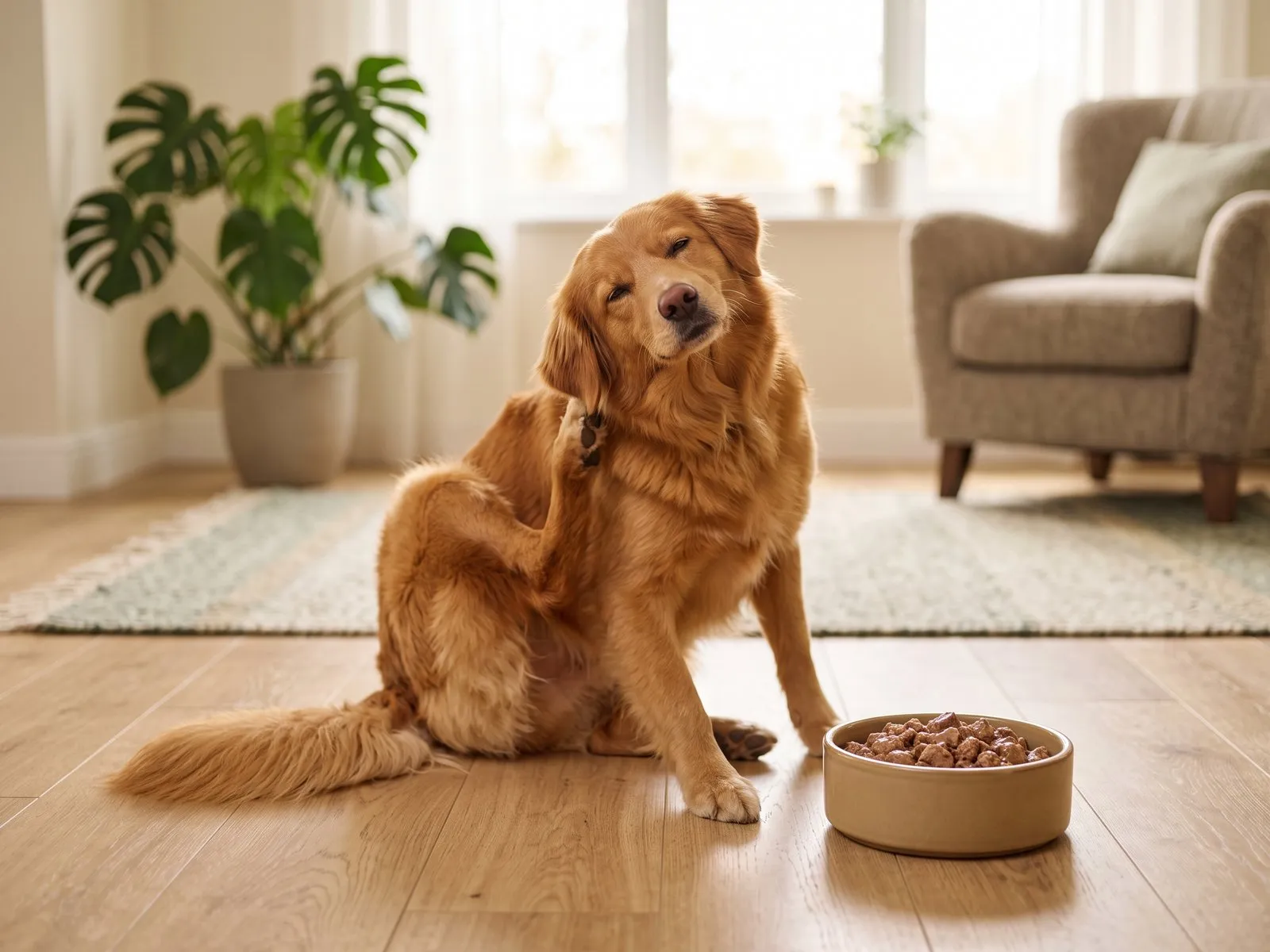
Recurring loose stools, a gurgling tummy, a dog that eats happily one day and just pushes the food around the bowl the next, even though nothing in its diet has changed. A sensitive stomach in dogs can be frustrating precisely because the symptoms come and go without a clear pattern. If digestive problems keep coming back, start with a visit to your vet. In this guide we show you how to support calm digestion in your dog day to day.
Symptoms of a sensitive stomach
Typical signs include loose stools or diarrhoea, sometimes alternating with normal ones, as well as bloating, wind and audible gurgling in the tummy. They often come with occasional vomiting and a fussy, changeable appetite that is hard to predict from one day to the next.
What causes a sensitive stomach
There can be many causes: changing food too quickly, a diet that is too fatty, table scraps, food intolerances and sometimes simple stress. Before you switch to a different food, take a look at what and how your dog is fed every day, because that is often the first clue.
When to see your vet
If digestive problems keep coming back or last longer than a few days, book a visit to your vet. Parasites, infections or diseases of the digestive tract can cause similar symptoms, and a change of food alone will not solve them. Do not wait if the symptoms are severe, there is blood in the stool, your dog vomits often, is lethargic or is losing weight. If your vet suspects a food intolerance, they may suggest an elimination diet.
The rules of an easily digestible diet
- A single, easily absorbed protein and a simple recipe, with no unnecessary extras.
- Less fat, which puts extra strain on digestion.
- Regular, smaller portions at set times of day.
- A slow change of food, over 7 to 10 days, mixing the old food with the new.
- No more table scraps or random treats, which are often behind stomach troubles.
We show you how to spot a simple recipe on the label in our guide to reading dog food labels.
Gut support
A healthy gut is the foundation of good digestion. Prebiotics and postbiotics that support the gut flora help here, and many dogs find wet food easier to digest than classic extruded food.
How Veli supports the gut
Gut support is one of the pillars of Veli: all our recipes contain EntoPro™, our proprietary bio-protein with a chitin prebiotic, MOS/FOS prebiotics and TruPet™, a postbiotic that supports gut function. For dogs with a sensitive stomach we especially recommend the Turkey + EntoPro™ recipe: turkey is a lean, easily digestible protein. Venison + EntoPro™ is also easily digestible and low in fat.
If your vet has ruled out other causes and you are looking for a food that supports your dog’s gut, build your bundle. Introduce the new food gradually, over 7 to 10 days.
How can I tell if my dog has a sensitive stomach?
By recurring loose stools, bloating, gurgling and a changeable appetite, even though your dog otherwise behaves normally. If the symptoms persist, talk to your vet.
What food is best for a dog with a sensitive stomach?
An easily digestible food with a simple recipe and a single, easily absorbed protein, ideally with gut support. Wet food is often easier to tolerate.
Is wet food easy to digest?
A good quality wet food with a simple recipe is often easier for many dogs to digest, partly thanks to its high water content. The ingredients are still what matters most.