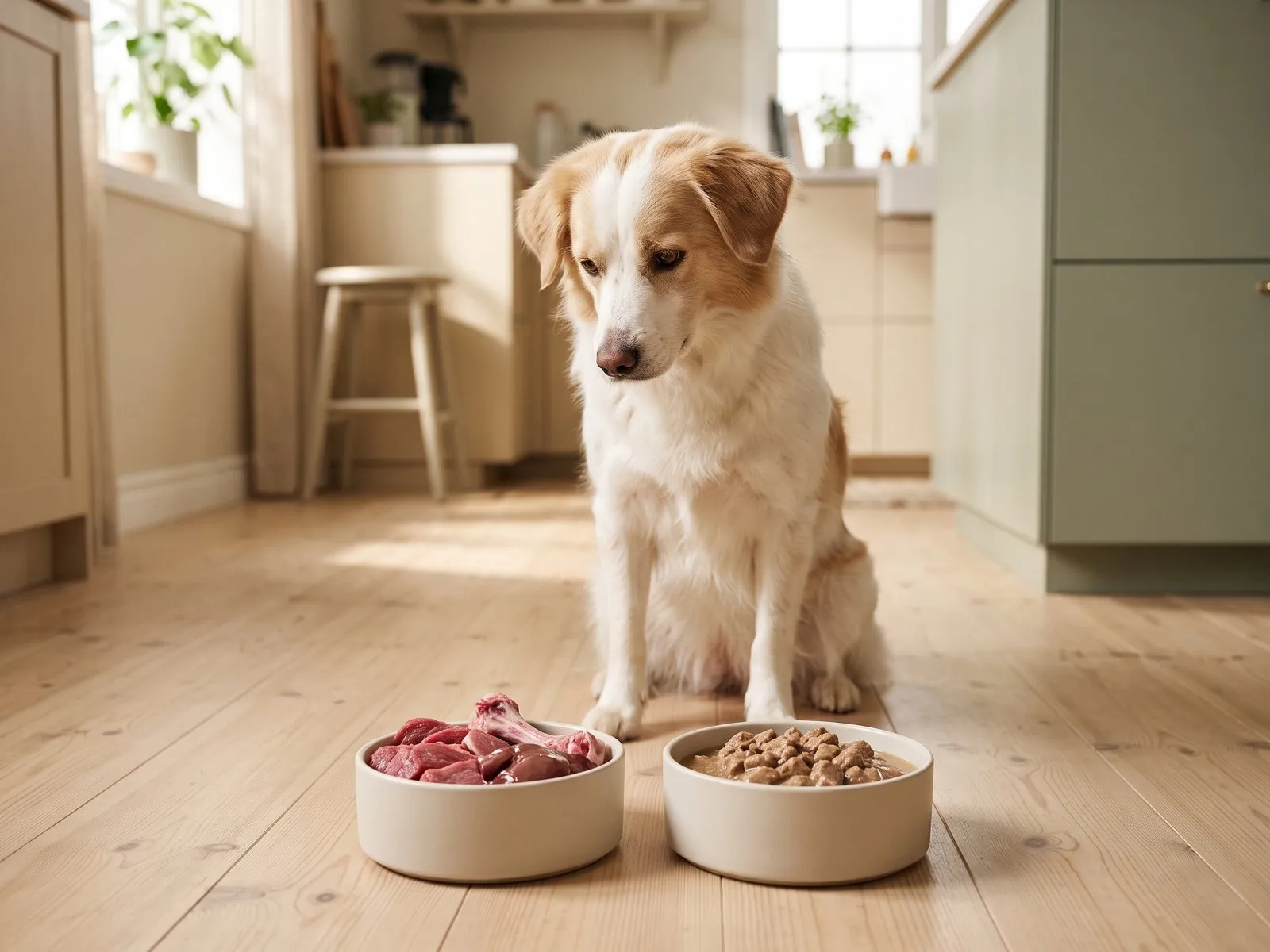
When you type “dog food ranking” into a search engine, you get dozens of lists with places from 1 to 10 and star ratings. The problem is that most of them are built on the same general criteria and don’t take your dog into account. After all, the best wet food for a neutered Labrador is something quite different from the best food for a French Bulldog puppy.
So instead of looking for one universal answer, it is worth learning to read the ingredients yourself. It is a skill that will stay with you longer than any ranking and will let you judge any food that lands on the shop shelf, not just the one in first place.
Why there is no single universal dog food ranking
A ranking that works well for the owner of an active Border Collie won’t necessarily be right for someone looking for food for a senior dog with a sensitive stomach. A puppy needs a different energy density from an adult dog, and a dog with a food allergy will react to ingredients that don’t bother other dogs at all.
That is why rankings are best treated as a starting point, not the final word. A ranking doesn’t know how much your dog weighs, how active it is or whether it tolerates poultry. You do. And once you know how to look at a label, you can easily judge whether a food really meets your dog’s needs.
5 criteria for spotting a good wet food
Before you trust the next place in a ranking, go through the checklist below. These five things will tell you more in a few minutes than the result on a list.
- A named meat at the top of the ingredients list, with its percentage. A good food is specific, for example “beef 50%”, rather than a vague “meat and animal derivatives”. The higher up the list a named meat appears and the bigger its percentage, the more you know about what actually goes into the bowl.
- A clear composition, with no vague terms. Phrases such as “meat and animal derivatives” or “vegetables” say nothing about what is really in the can. A manufacturer with nothing to hide usually lists the specific raw materials and their percentages. If you aren’t sure how to interpret this information, take a look at our guide to reading dog food labels and learn to recognise the warning signs.
- No unnecessary additives. Your dog has no need for sugar, artificial colourings or synthetic flavour enhancers. A dog doesn’t mind what its food looks like, and the taste of a good food comes mainly from the meat. If you see a lot of cereals in the ingredients, also check how high up the list the meat is and how much of it there is.
- Real functional value. A good food is more than protein and fat. More and more manufacturers add ingredients that support particular body functions, for example fibre, prebiotics and postbiotics for the gut, or omega-3 fatty acids for skin and coat condition. These are exactly the additions that separate a food that is “good enough” from one that genuinely supports your dog’s health in the long run.
- Complete food and a transparent manufacturer. The food should be clearly labelled as complete or complementary, and the manufacturer should openly state where the food is made and where the raw materials come from. If that information is missing or hidden in small print, it is a sign to ask the manufacturer directly or look for an alternative.
Wet or dry dog food
Wet food has a high water content, so it helps keep your dog well hydrated and is usually eaten more willingly, especially by fussy dogs or dogs that drink little water. Dry food, on the other hand, is easier to store and has a higher calorie density for the same weight.
| Feature | Wet food | Dry food |
|---|---|---|
| Water content | high, keeps your dog hydrated | low |
| Palatability | usually higher | depends on the dog |
| Calorie density | lower for the same weight | higher for the same weight |
| Processing | gentler | extrusion at high temperature |
| Storage | less convenient | convenient, long shelf life |
Both forms can be nutritionally complete if the food is a complete food and well formulated. The biggest practical difference is water: a dog on dry food has to drink more, while wet food does some of that work for it. Many people combine both types of food to get the benefits of both formats. If you are wondering which option is better for your dog, take a look at our guide to wet or dry dog food, where we break these differences down in detail.
How Veli measures up against these criteria
Veli is a complete wet food with a high share of named meat and a fully open composition: we give the percentage of every ingredient. The recipe is completed by EntoPro™, our proprietary bio-protein, and the postbiotic TruPet™, which together support the gut. We describe the role of both on our How it works page. The food is made in Poland.
When designing our recipes, we followed the same five criteria. But we care about more than a good place in a ranking: we want judging the ingredients of any food to come easily to you, whether you reach for ours or another one. If you would like to try Veli, build your bundle to suit your dog’s needs.
What is the best wet dog food?
One that meets the needs of your particular dog and also has a high share of named meat and a clean, clear composition. Instead of looking for one answer that suits every dog, judge the foods available against the composition criteria described in this article.
Is wet food healthy?
Yes, if it has a good recipe. Wet food also helps keep your dog hydrated thanks to its high water content, which can be especially important for dogs that drink little. What counts, though, is the quality of the composition, not the format of the food itself.
How can I tell a good wet food?
By a named meat with its percentage at the top of the ingredients list, no unnecessary additives such as sugar or colourings, and a clear statement from the manufacturer about where the raw materials come from and where the food is made.