The “puppy”, “adult” and “senior” labels on dog food suggest clear boundaries, but in practice a dog does not change life stage overnight along with a page in the calendar. It is worth knowing what to look out for, so you can change food at the right moment, neither too early nor too late.
How long to feed puppy food
Puppy food is fed until your dog stops growing. Small breeds reach adulthood sooner, usually at around 10 to 12 months of age. Large breeds grow for longer, around 12 to 18 months, and giant breeds even up to 24 months. We write more about feeding a young dog in our guide to feeding a puppy.
When to move to adult food
Dogs move to adult food once they have stopped growing. This is the longest stage of a dog’s life, when the most important thing is keeping a healthy weight and good condition, without the need for frequent changes to the diet. A change of food is also a good moment to review the rhythm of meals, which we set out in our guide to how often to feed a dog.
When to move to senior food
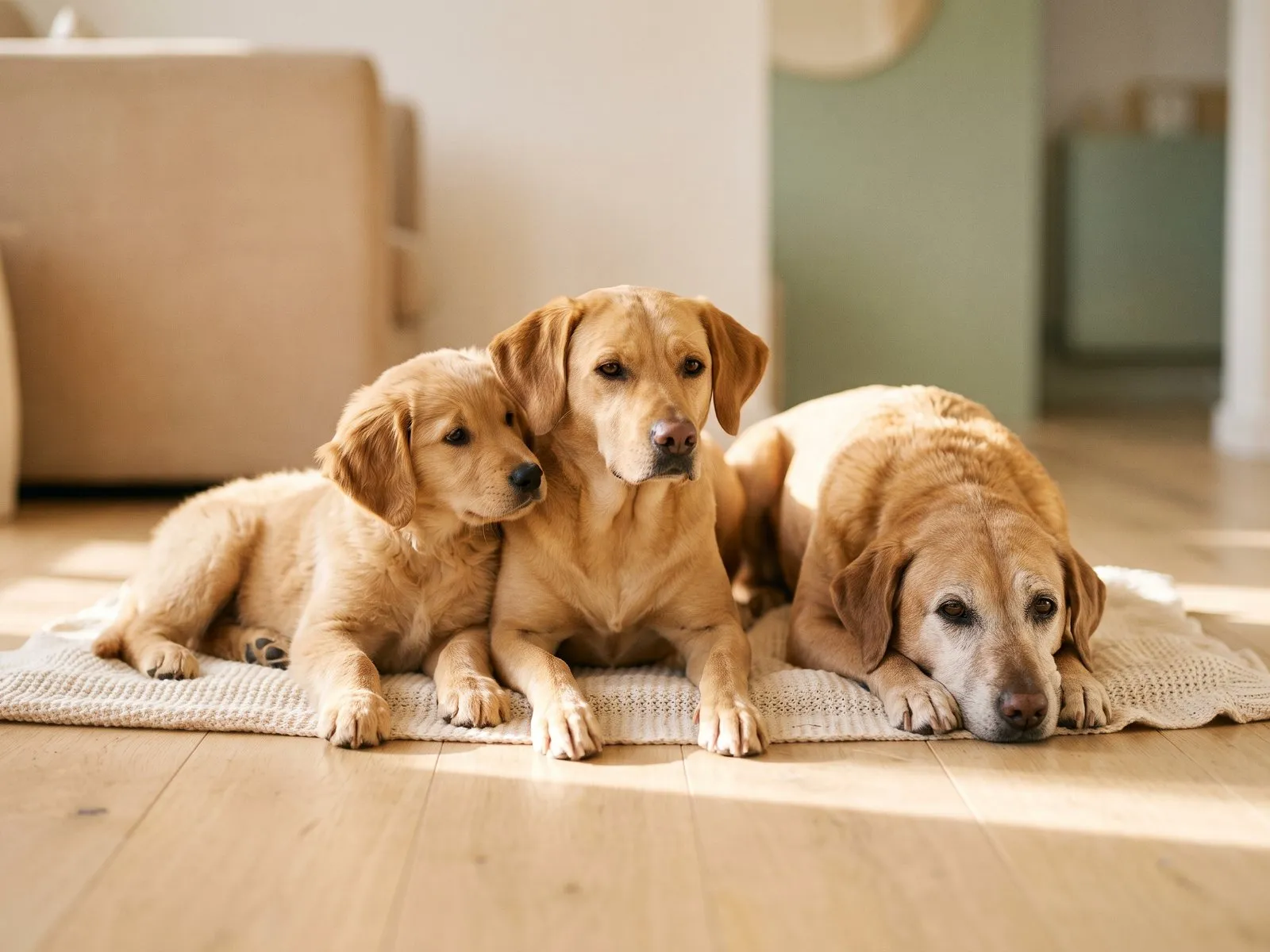
When a dog becomes a senior depends on its size: small breeds are usually considered seniors at around 8 to 10 years of age, large breeds at around 6 to 7 years and giant breeds even at around 5 to 6 years. Rather than looking only at the date of birth, watch for the signs: less energy, a tendency to put on weight, a slower metabolism. Very old dogs, on the other hand, are more likely to lose weight, so keep an eye on weight in both directions. Read more in our guide to feeding a senior dog.
| Stage | When it starts | What to look at |
|---|---|---|
| Puppy | until growth ends | small breeds around 10 to 12 months, large 12 to 18, giant even up to 24 months of age |
| Adult | once growth ends | the longest stage, the priority is a healthy weight and good condition |
| Senior | small breeds around 8 to 10 years, large 6 to 7, giant 5 to 6 | less energy, a tendency to put on weight, a slower metabolism |
How to change food gradually
Introduce every change of food, including one due to age, over 7 to 10 days, gradually increasing the share of the new food at the expense of the old one. This way you avoid the digestive problems that often come with a sudden change of diet.
Do you always have to switch?
The life stage label is a guide, not a strict rule. Always look first at your own dog: their weight, energy and body condition, which is easy to assess with the simple test described in our guide to overweight dogs. If you are unsure, talk to your vet about choosing a food rather than guessing.
Veli is a complete wet food for adult dogs. We calculate the portion from your dog’s weight, age and lifestyle. If your dog has just finished growing, build your bundle and spread the move to the new food over 7 to 10 days.
Until what age should my dog eat puppy food?
Until they stop growing: small breeds at around 10 to 12 months, large breeds at around 12 to 18 months and giant breeds even up to 24 months of age.
At what age should my dog move to senior food?
Depending on your dog's size, usually between 6 and 10 years of age, and in giant breeds even at around 5 to 6 years. Ideally when signs of ageing appear, such as lower activity.
How do I change my dog's food without upsetting their stomach?
Gradually, over 7 to 10 days, mixing the new food with the old one and increasing its share day by day.